


Costa Rica
Where Tropical Forest Meets the Pacific
A Country Best Understood by Its Coasts
Costa Rica may appear compact on a map, but its coastlines create meaningfully different journeys. Guanacaste in the north feels open, sunlit and relatively accessible, while the landscape becomes progressively greener and more remote along the Central and South Pacific. On the Caribbean side, the climate, culture and rhythm change again.
Choosing where to stay is therefore less about finding the country’s most famous beach and more about understanding how you want the days to feel. Families looking for an easy arrival, private accommodation and time on the water may be drawn to the North Pacific. Travelers seeking surf towns and a more independent atmosphere may prefer the Nicoya Peninsula, while those placing wildlife and deep rainforest first will often look further south.
CVAY’s Costa Rica collection begins on Peninsula Papagayo, where calm Pacific bays, tropical dry forest and highly personalized private hospitality come together within one carefully managed coastal setting.
Choosing Your Costa Rica Coast
No single region represents the whole of Costa Rica. Each coast offers a different balance of accessibility, landscape and daily life.
Guanacaste & North Pacific
Guanacaste offers the most straightforward introduction to coastal Costa Rica. Flights into Guanacaste Airport make the northern coastline relatively accessible, while protected bays, tropical dry forest and a drier Pacific season support boating, swimming and outdoor living. This is where CVAY’s current collection is centered.
The Nicoya Peninsula
Further south, places such as Santa Teresa bring a more independent rhythm shaped by surfing, wellness and informal beach life. The atmosphere can feel creative and relaxed, although road journeys are often longer and the experience is less self-contained than Papagayo.
Central & South Pacific
Around Manuel Antonio and farther south toward the Osa Peninsula, rainforest moves closer to the water and wildlife becomes a stronger part of the journey. These regions suit travelers willing to accept longer transfers, higher rainfall and a greater sense of remoteness.
The Caribbean Coast
Costa Rica’s Caribbean side has its own cultural identity, tropical vegetation and seasonal pattern. It is better approached as a separate journey rather than simply an alternative version of the Pacific coast.
CVAY will introduce additional regions only when we find homes that genuinely reflect their setting.
Peninsula Papagayo: Nature Without a Difficult Arrival
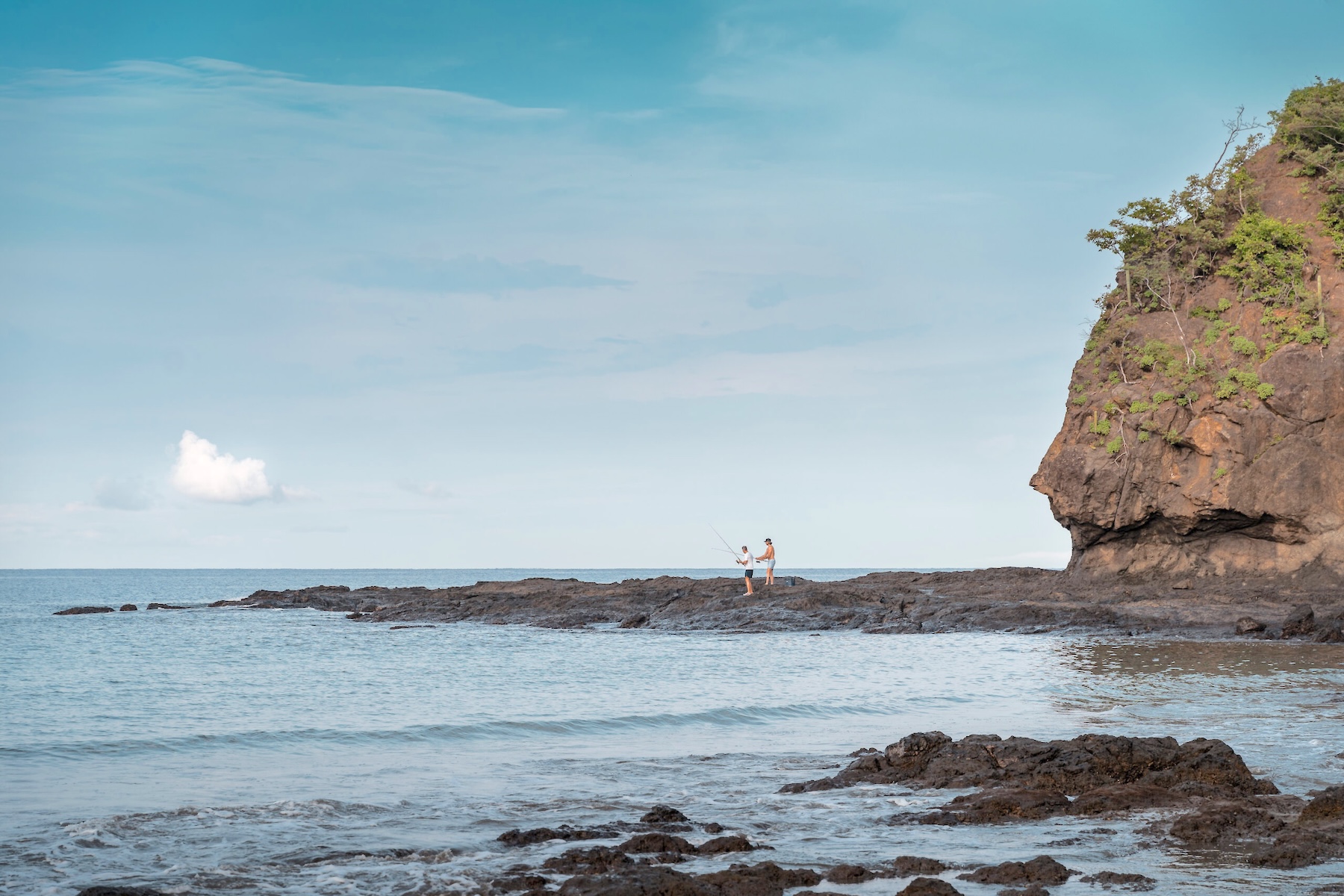
Peninsula Papagayo occupies a forested position along Guanacaste’s North Pacific coast. Its sheltered bays, low-density development and proximity to Guanacaste Airport create an unusual combination: guests can reach a private coastal setting without beginning the stay with a long overland journey.
The peninsula works particularly well for families and multigenerational groups who want nature, water and outdoor activity close at hand, but also value privacy, reliable hospitality and the ability to shape each day around different ages and interests.
Papagayo is more self-contained than Costa Rica’s surf towns. Guests do not generally choose it for walkable streets or spontaneous evenings in town. The villa, its setting and the quality of its hospitality become central to the stay. For the right group, that creates a welcome sense of ease.
Days Between Forest and Water
Life along the North Pacific naturally moves between the coast and the landscape behind it. Sheltered bays make space for boating, snorkeling, paddleboarding and fishing, while more exposed stretches of coastline bring opportunities for surfing and longer days exploring by water.
Inland, Guanacaste opens toward volcanic landscapes, rivers, waterfalls, hot springs and protected forest. These experiences are possible from Papagayo, but Costa Rica’s roads and terrain mean that distance should be measured in time rather than kilometers. A well-planned stay leaves enough room for exploration without turning every day into an excursion.
This is part of Costa Rica’s appeal: adventure is readily available, but it does not need to dominate the entire journey.
Featured Coastal Stay
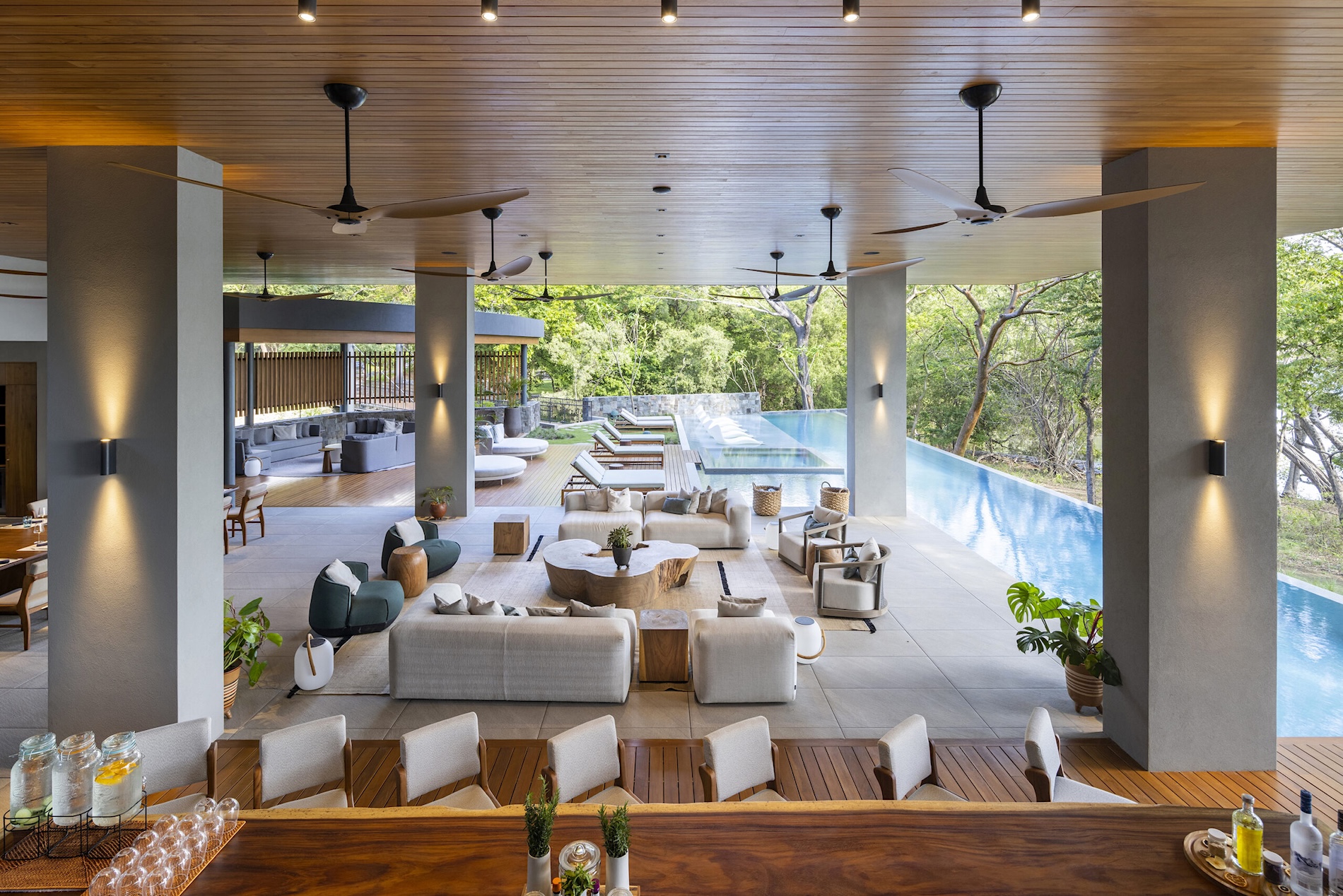
Villa Avellana, Peninsula Papagayo
Villa Avellana is CVAY’s first exceptional stay in Costa Rica: a ten-bedroom beachfront estate created for extended families, celebrations and groups who want to experience the country together without giving up personal space.
The estate accommodates up to 23 guests and is supported by a hospitality team of more than 25 people. Meals, an open bar, airport transfers, local transportation, private boats, captains, fuel and a wide range of activities are included. This fully hosted structure allows different generations to follow their own rhythm before coming together again around the pool, dining table or water.
Its architecture is equally important. Expansive living, dining and poolside spaces flow across one open level, while the tropical landscape remains present throughout the house.
Details:
- 10 ensuite bedrooms
- Up to 23 guests
- Fully hosted private estate
- Direct access to Prieta Beach
When Costa Rica Feels Right
Along Costa Rica’s Pacific coast, the dry season generally runs from December through March, with April acting as a transition month. This period brings more predictable sunshine, but it is also the most requested time of year, particularly around Christmas, New Year and school holidays.
From May through August, the landscape becomes greener and rain is more likely, often later in the day. July and August can bring a relative easing of the rainfall known locally as veranillo, although conditions should never be treated as guaranteed.
September and October are usually the wettest Pacific months. They can reveal Costa Rica at its most intensely green, but they are less suitable for travelers whose plans depend heavily on boating, long outdoor days or predictable weather. November is another transition period.
The Caribbean coast follows a different seasonal pattern, which is one more reason to choose the region before choosing the month. These distinctions follow current guidance from the Costa Rica Tourism Board.
Who Costa Rica Suits Best
Costa Rica is especially rewarding for families and groups who want nature to be part of everyday life rather than a single scheduled excursion. It allows active and quieter guests to share the same journey: one part of the family can spend the morning on the water while another remains beside the pool, practices yoga or enjoys the landscape at a gentler pace.
It is less suited to travelers primarily looking for a compact coastal town, formal shopping or a different restaurant within walking distance each evening. Many of the country’s most memorable homes are deliberately set apart, and the quality of the villa, its team and its surroundings matters considerably.
For travelers comfortable with that rhythm, Costa Rica offers something increasingly rare: a meaningful sense of space without requiring the family to give up comfort or attentive hospitality.
For families travelling across several generations, choosing between a resort and a fully staffed private villa can shape the entire stay. Read our guide to choosing between a private villa and resort in Costa Rica →
Planning Your Costa Rica Stay
Arriving in Papagayo
Guanacaste Airport, identified by the airport code LIR, is the natural arrival point for Peninsula Papagayo. The transfer is approximately 30 minutes, and airport transportation is included for guests staying at Villa Avellana.
Allowing Enough Time
For a private coastal stay, seven to ten nights gives the journey room to settle. If an inland experience is important, add one carefully chosen second base rather than moving every two or three days.
Traveling Between Regions
Costa Rica’s mountains, road conditions and ferry routes can make short map distances take longer than expected. San José Airport may be more practical for parts of the Central and South Pacific, while LIR is generally preferable for Guanacaste.
Begin with Peninsula Papagayo
CVAY’s Costa Rica collection currently begins with one remarkable estate on the Pacific coast. As the collection grows, we will introduce other regions slowly—guided by the character of each place and the homes that genuinely belong there.
For now, Villa Avellana offers a complete way to experience Costa Rica through privacy, family time, thoughtful hospitality and direct access to the water.