

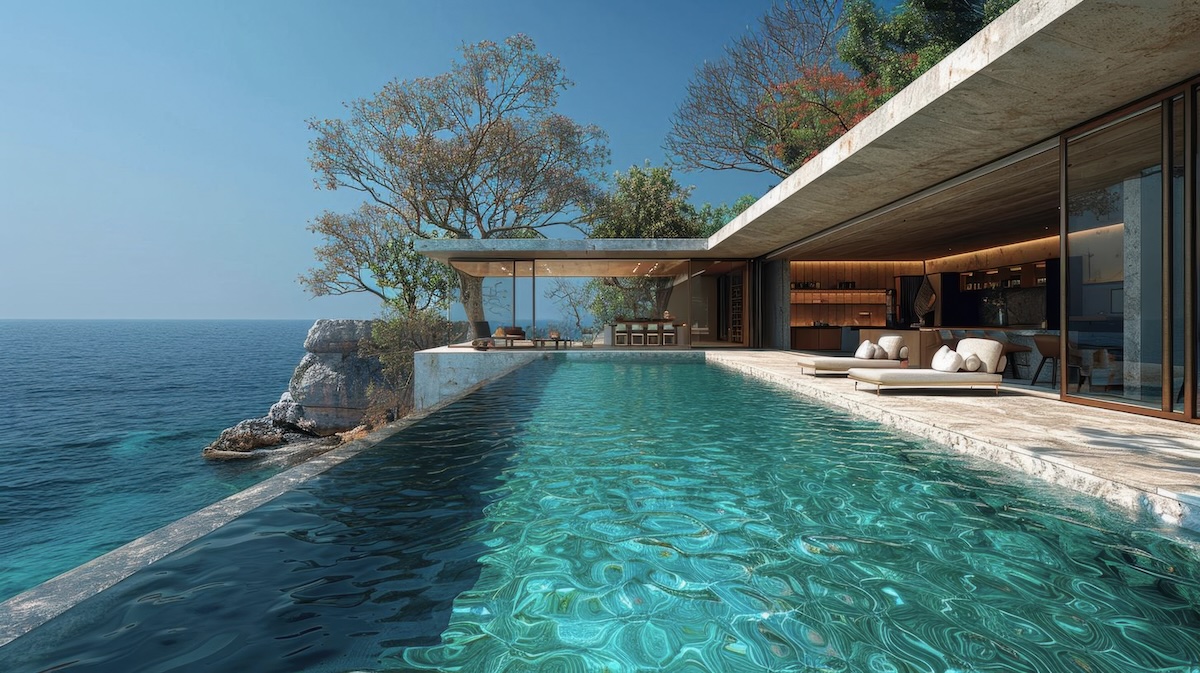

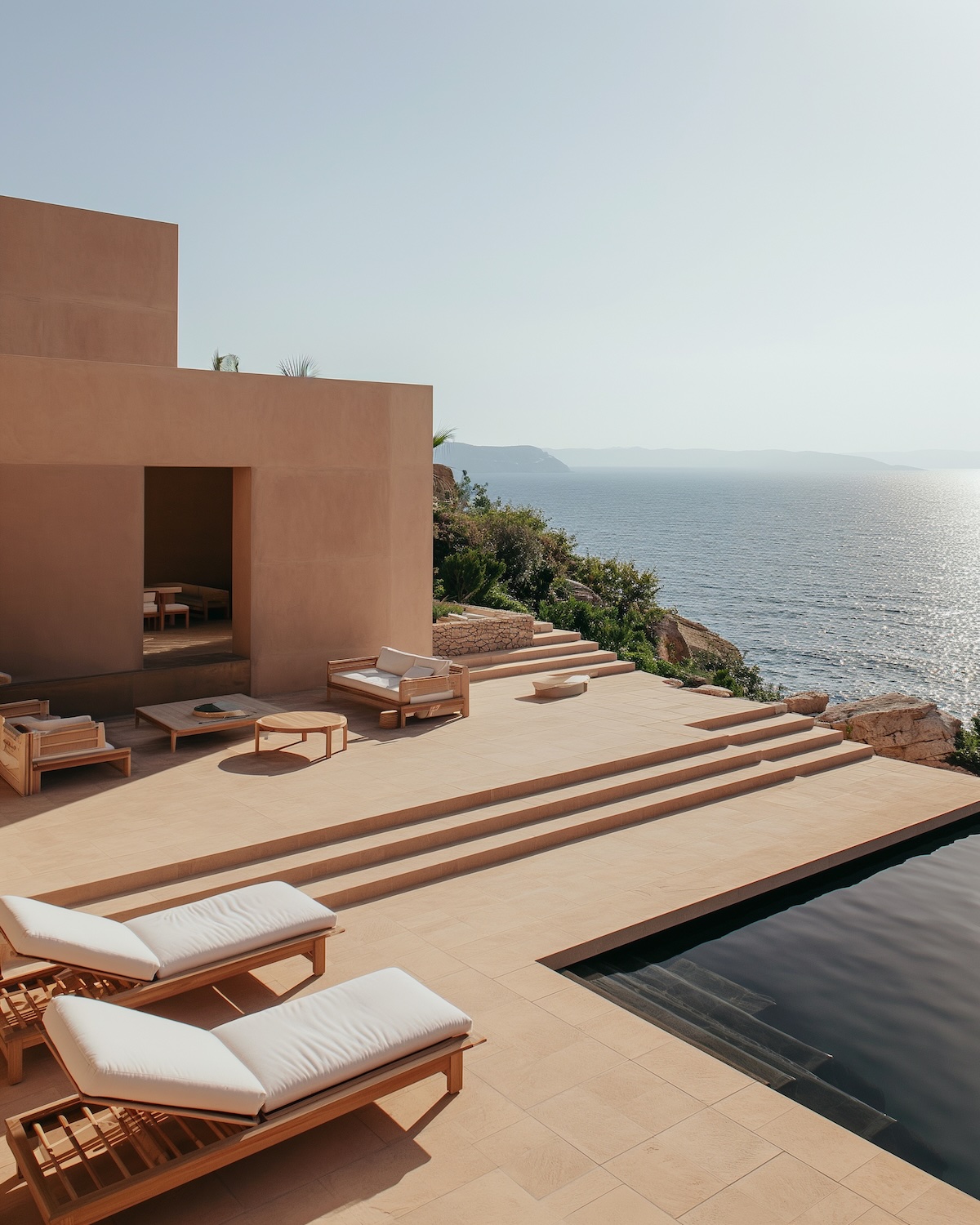

Spaces shaped by light, sea air, and stillness.
There is a measurable difference between being near the sea and being far from it.
Light reflects differently. Air moves differently. Sound softens.
Coastal wellness is not about indulgence.
It is about nervous system recalibration.
When we design or choose homes, villas, or yachts near the water, we are often responding to something intuitive:
A desire for clarity, space, and emotional reset.
This page explores the architectural and spatial concepts that make that possible.
An uninterrupted view toward open water creates visual depth.
When the eye can travel further, the mind follows.
Homes and yachts that prioritize long sightlines offer more than beauty — they create mental spaciousness and perspective.
Coastal light reflects before it illuminates.
It softens edges and reveals texture without heaviness.
Spaces designed with pale materials and generous glazing allow light to shape mood naturally throughout the day.
Sliding glass panels, shaded terraces, and open transitions reduce physical and visual barriers.
When inside and outside connect fluidly, the body relaxes. Movement becomes effortless rather than confined.
Stone, wood, linen, and natural fibers anchor the senses.
These materials absorb sound, diffuse light, and provide tactile stability — subtle details that support emotional calm.
Understanding coastal wellness is not theoretical. It directly influences how we select villas, yachts, and coastal homes.
When reviewing a property, consider orientation before amenities.
Where does the light enter?
Is the horizon visible from primary living spaces?
Does the architecture open outward — or turn inward?
On yachts, notice deck flow and anchoring position. A vessel facing open water at anchor offers a different psychological experience than one turned toward crowded marinas.
Coastal wellness is not about adding features.
It is about removing friction.
When space aligns with natural rhythm, calm follows.
When selecting a coastal villa or yacht, begin with orientation rather than amenities.
Observe where the light enters throughout the day. A primary living space that opens toward open water creates clarity that interiors alone cannot provide.
Consider the strength of the horizon line. Uninterrupted sightlines foster psychological spaciousness.
Notice the material palette. Natural stone, pale woods, linen, and restrained finishes soften light and reduce visual noise.
On yachts, evaluate deck flow and anchoring position. A vessel resting bow-to-horizon offers a fundamentally different experience than one oriented toward marina traffic.
Privacy should feel protective, not isolating. The most supportive spaces create separation without disconnection.
Coastal wellness is not a feature list.
It is alignment between architecture and rhythm.
The most supportive coastal spaces do not announce themselves.
They are felt quietly — in the way light moves across a floor, in the openness of a horizon, in the absence of unnecessary noise.
Whether selecting a villa for a season or a yacht for a journey, the principles remain consistent. Orientation, material restraint, and fluid movement shape how a space lives — and how you feel within it.
When architecture aligns with natural rhythm, calm is not added.
It is revealed.
Compare listings
ComparePlease enter your username or email address. You will receive a link to create a new password via email.
We use cookies to ensure the website works properly, understand how visitors use CVAY, and support selected features such as maps, videos and social media. You can accept all cookies, decline optional cookies, or manage your preferences.