How colour, natural materials and handcrafted pieces can give a contemporary interior a strong sense of place — without turning it into a theme.
What makes an interior feel connected to a place? Here, white plaster, natural timber and woven materials create a quiet background for unexpected colour. The result feels unmistakably Mexican, without relying on the obvious.
Let the architecture provide the calm
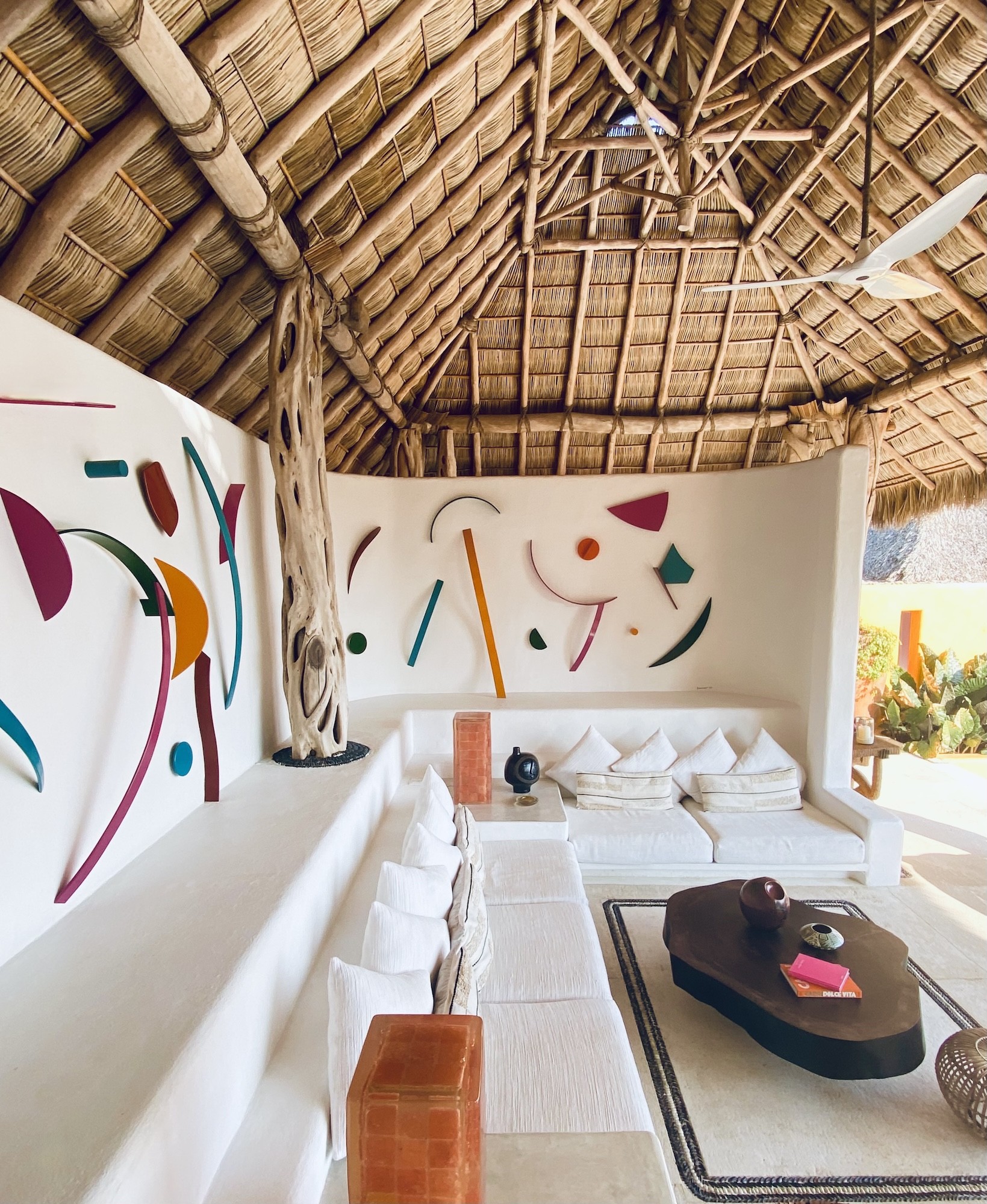
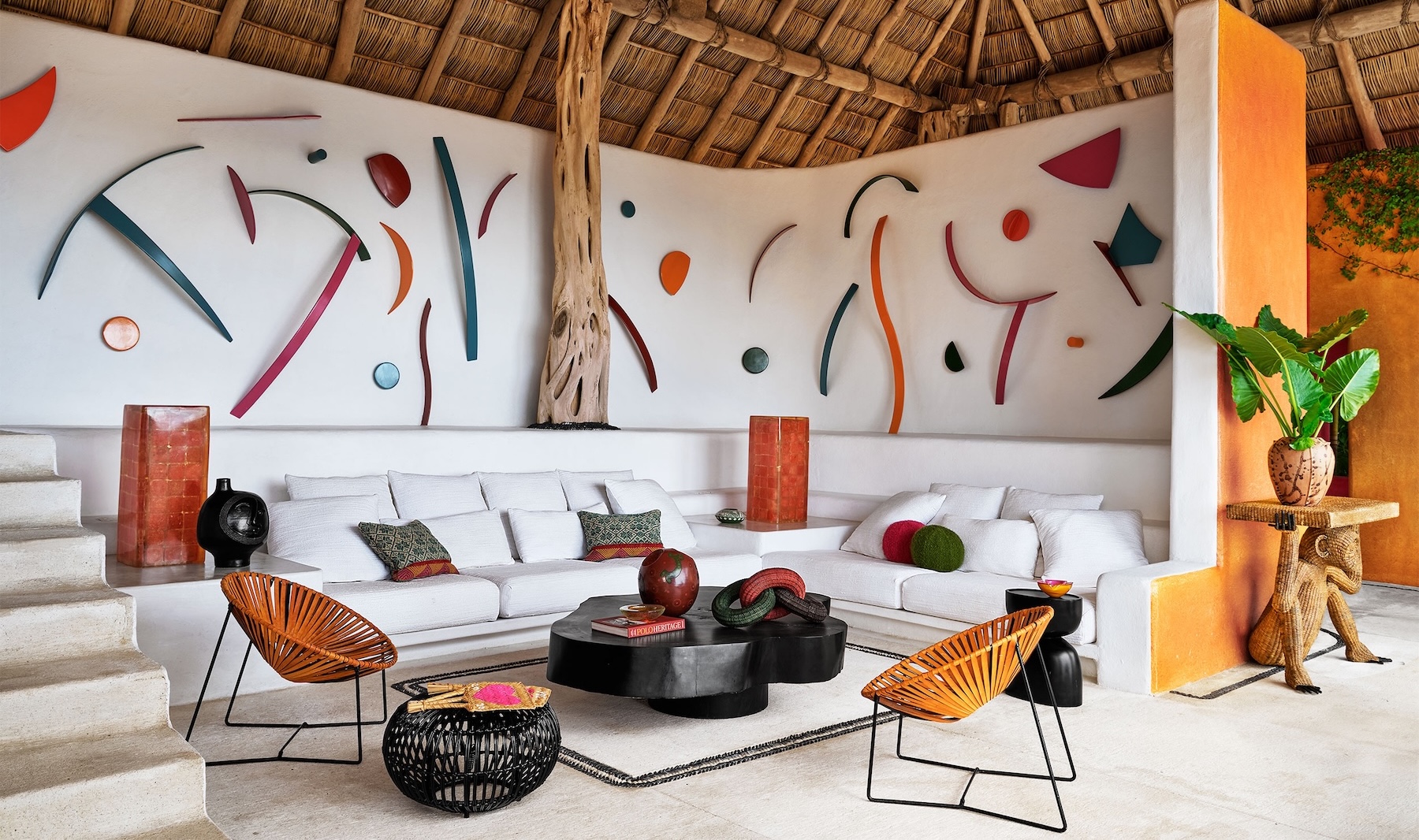
White walls and built-in seating give colour room to breathe. Beneath the woven palapa roof, natural timber adds warmth while the architecture remains simple.
Against this quiet background, art and furniture don’t need to match. A calm foundation leaves more room for personality.
Modern colour meets the natural texture of the palapa.
Make colour part of the room
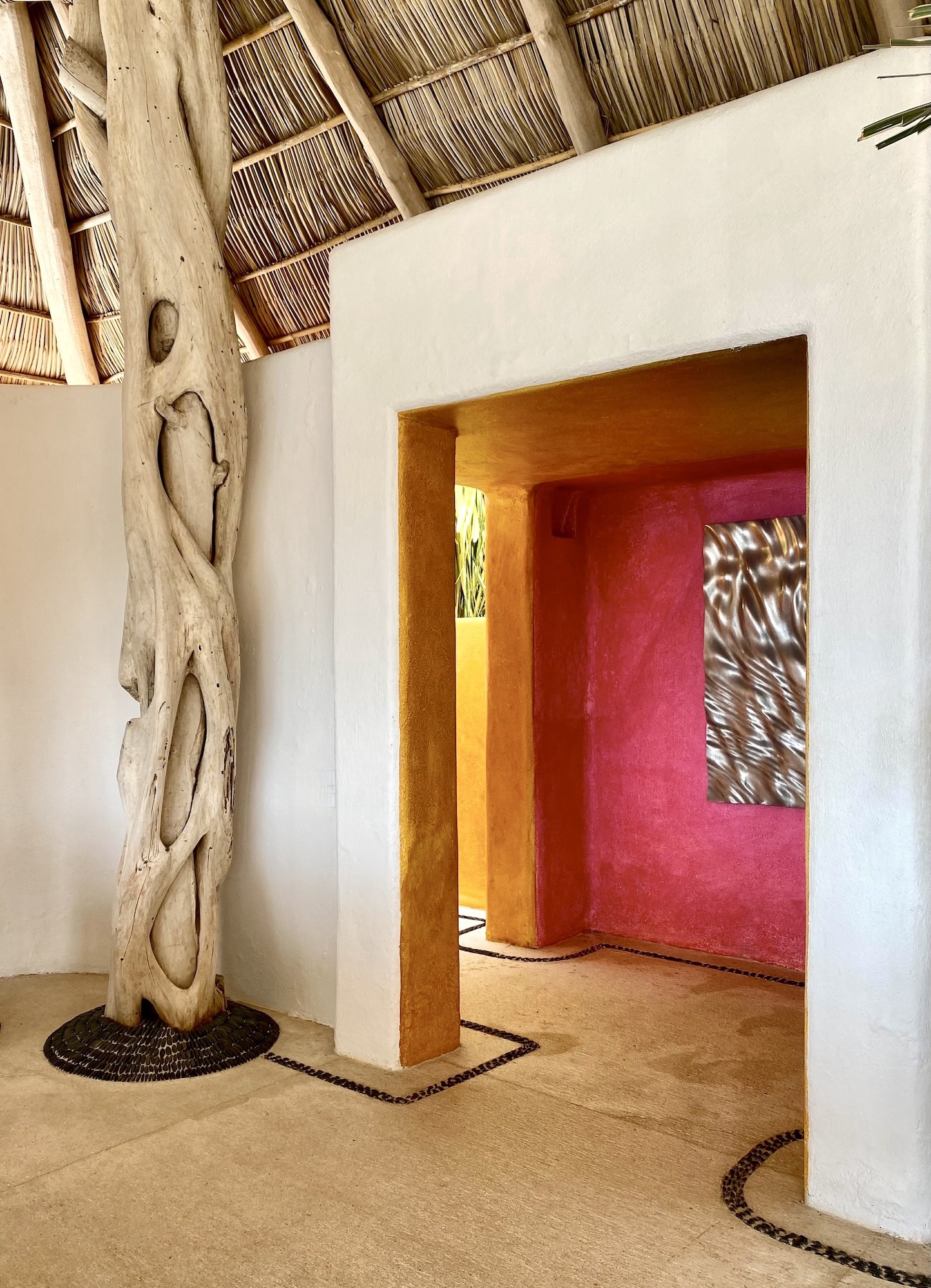
Colour becomes more interesting when it moves beyond furniture and accessories and becomes part of the architecture itself. Here, ochre and deep pink transform a simple passage, while the surrounding white keeps everything balanced.
What makes it work is that the colour isn’t everywhere. It appears exactly where the architecture changes, drawing your eye through the space and making a simple transition between rooms feel intentional.
The same idea can work beautifully on a smaller scale: around a doorway, behind kitchen shelving, in a reading corner or inside a small bathroom. Combined with natural timber, stronger colour feels warmer and more natural — adding character without needing much additional decoration.
Bold colour becomes part of the architecture rather than the decoration.
Bold colour becomes part of the architecture rather than the decoration.
One piece can be enough
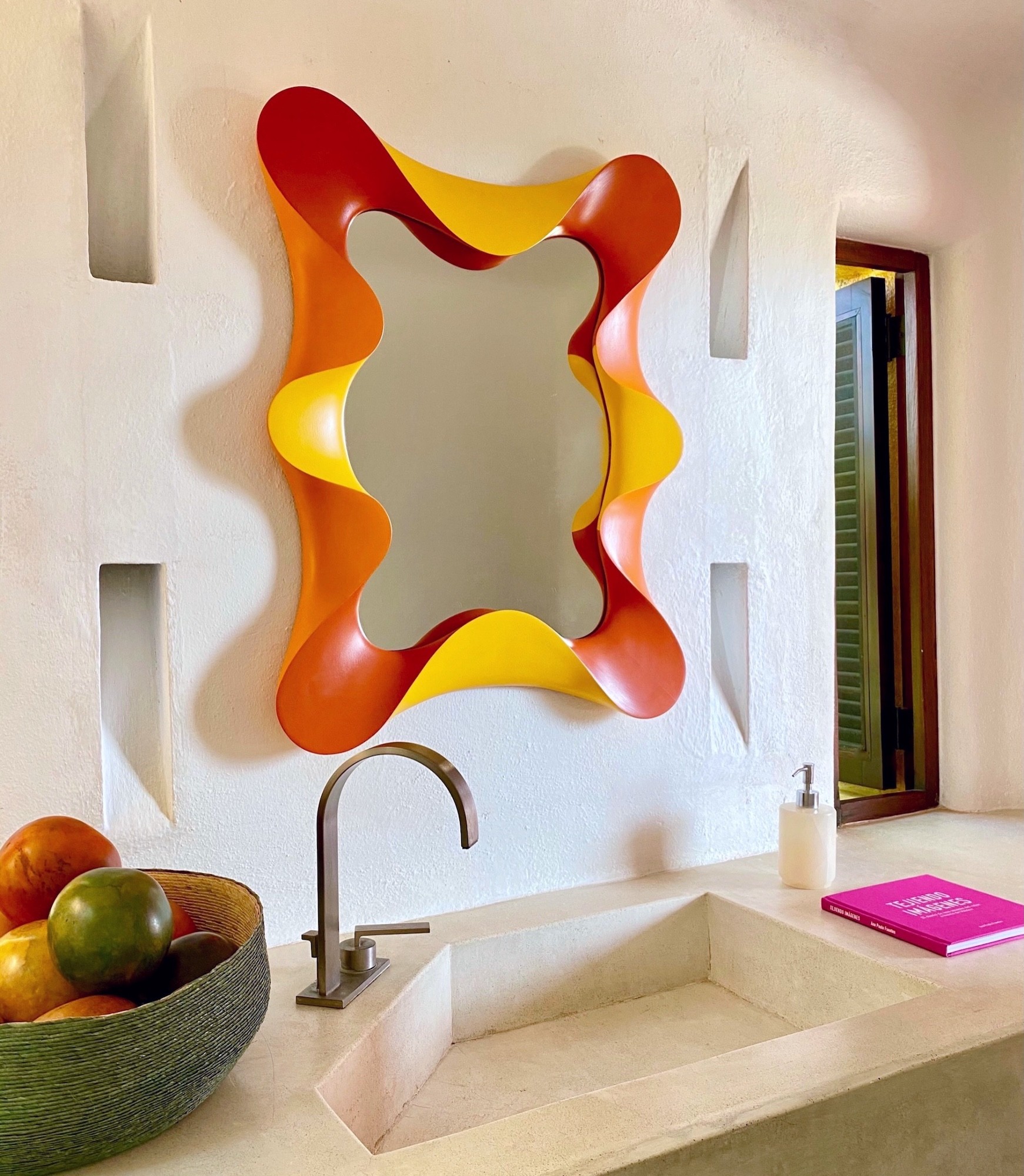
One expressive piece can give a simple room its personality.
This bathroom is almost entirely white, which makes the sculptural mirror in orange, red and yellow even more striking. Nothing else in the room tries to compete with it or continue the same colours.
It is a simple idea, but an effective one. A neutral bathroom, hallway or bedroom doesn’t always need several decorative elements to make it interesting.
One unusual mirror, handmade lamp, piece of art or colourful chair can be enough — especially when it is something chosen because you genuinely love it.
One expressive piece can give a simple room its personality.
Leave room for personality
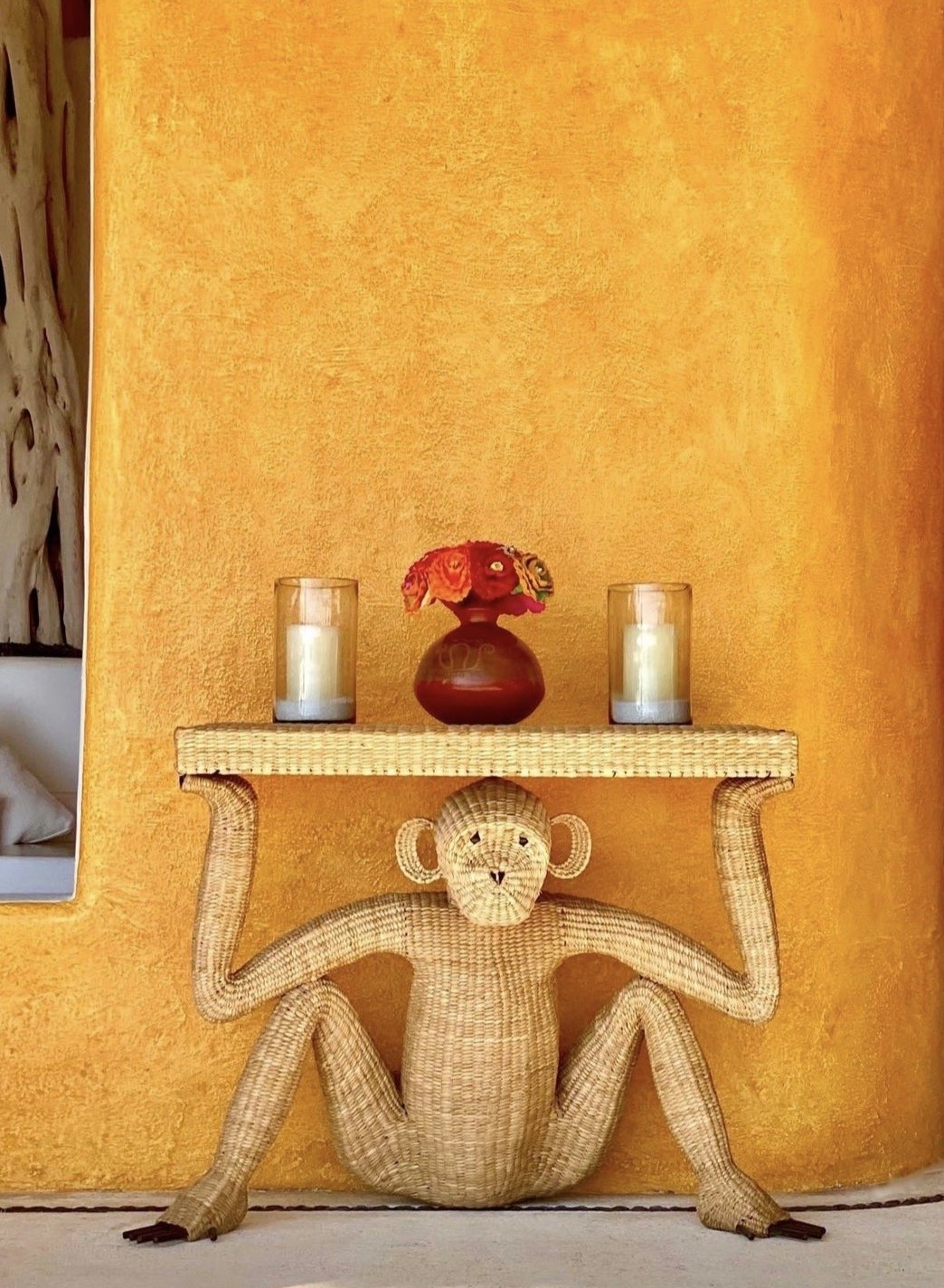
A woven monkey holding a console table is both functional and unexpected. The natural material connects easily with the timber and woven surfaces elsewhere in the house, while its shape brings humour to an otherwise simple corner.
What makes it work is the contrast. The craftsmanship feels rooted in the setting, but the object itself is playful rather than traditional. It shows how handmade pieces can sit comfortably in a contemporary interior without making the room feel rustic or overly styled.
An unusual object found while travelling, something inherited or an unexpected vintage piece can bring the same individuality into a home. These pieces don’t have to match everything around them. Sometimes it is precisely the object that seems slightly out of place that gives a room its personality — and becomes the thing we remember most.
Handcrafted pieces bring warmth, character and a little humour.
Handcrafted pieces bring warmth, character and a little humour.
Repeat the feeling, not the formula
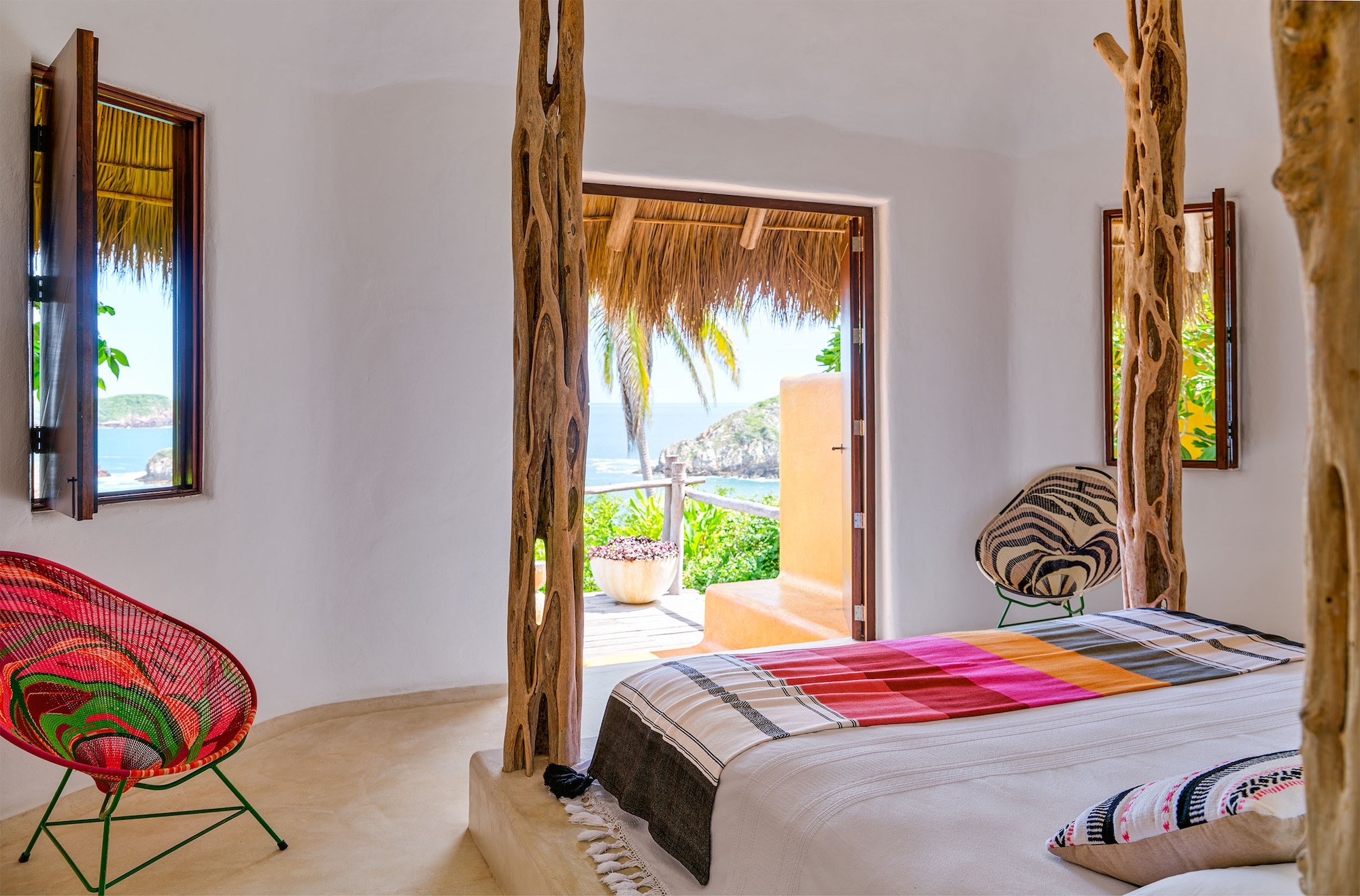
A quieter palette, connected through natural materials and texture.
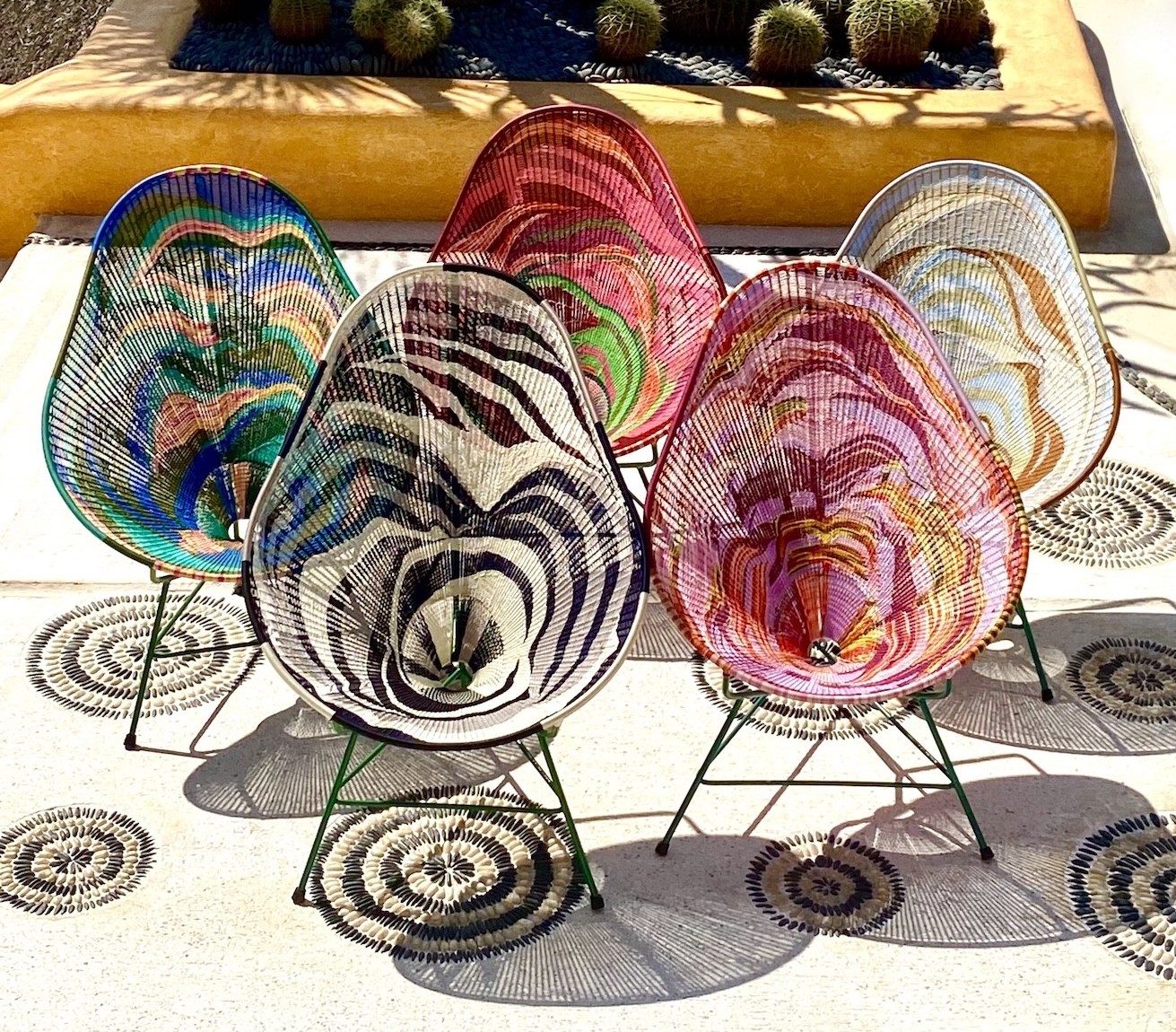
The bedroom becomes noticeably quieter. White dominates, while carved timber, woven chairs and a striped textile carry enough character from the other rooms to make everything feel connected.
Continuity doesn’t mean repeating the same palette in every room. A colourful living room can lead naturally to a calmer bedroom when materials such as wood, weaving and handmade pieces create the connection instead.
Allowing each room to have its own mood can actually make a home feel more personal — connected, but never overly coordinated.
A quieter palette, connected through natural materials and texture.
Let the landscape complete the palette
Pink, green, blue and natural fibre might sound like a difficult combination indoors. Here, against ochre walls, palms, cacti and the deep blue of the Pacific, the colours suddenly feel completely natural.
The landscape is already part of the palette. Looking at what we see through our windows can therefore be just as useful as looking at a mood board when choosing colours for a room.
It is also why coastal interiors don’t need obvious seaside references. Light, natural materials and the colours outside can create that connection much more naturally.
Colour feels effortless when it takes its cues from the landscape.
Colour feels effortless when it takes its cues from the landscape.
The house behind the interiors
These rooms belong to Casa Torre in Careyes, Mexico, designed by Mexican architect Diego Villaseñor in 1988. Open-air palapas, sculptural architecture and gardens by Eric Nagelmann connect the interiors naturally to the Pacific landscape.
And perhaps that explains why the house feels so distinctly Mexican without relying on a traditional Mexican look. Its identity comes through colour, craft, materials, climate and the way the spaces are lived in.
Experience Casa Torre
There is one final detail that makes this particular interior rather special: Casa Torre isn’t a home we can only experience through photographs.
The house is part of the CVAY Collection and is available as a private villa stay in Careyes.
So the colourful mirror, woven chairs and unexpected pieces may inspire an idea for home. Or you can experience the architecture, colours, craftsmanship and Pacific setting that brought them together in the first place.
Please enter your username or email address. You will receive a link to create a new password via email.
Manage Consent
We use cookies to ensure the website works properly, understand how visitors use CVAY, and support selected features such as maps, videos and social media. You can accept all cookies, decline optional cookies, or manage your preferences.
Functional
Always active
The technical storage or access is strictly necessary for the legitimate purpose of enabling the use of a specific service explicitly requested by the subscriber or user, or for the sole purpose of carrying out the transmission of a communication over an electronic communications network.
Preferences
The technical storage or access is necessary for the legitimate purpose of storing preferences that are not requested by the subscriber or user.
Statistics
The technical storage or access that is used exclusively for statistical purposes.The technical storage or access that is used exclusively for anonymous statistical purposes. Without a subpoena, voluntary compliance on the part of your Internet Service Provider, or additional records from a third party, information stored or retrieved for this purpose alone cannot usually be used to identify you.
Marketing
The technical storage or access is required to create user profiles to send advertising, or to track the user on a website or across several websites for similar marketing purposes.