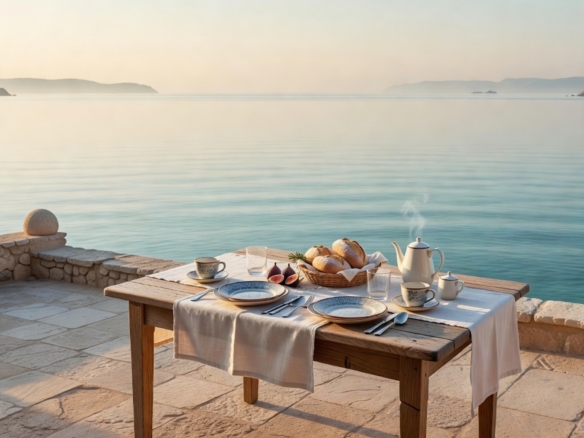
How natural materials, sculptural furniture and a seamless connection with the outdoors can make expansive interiors feel warm, relaxed and inviting.
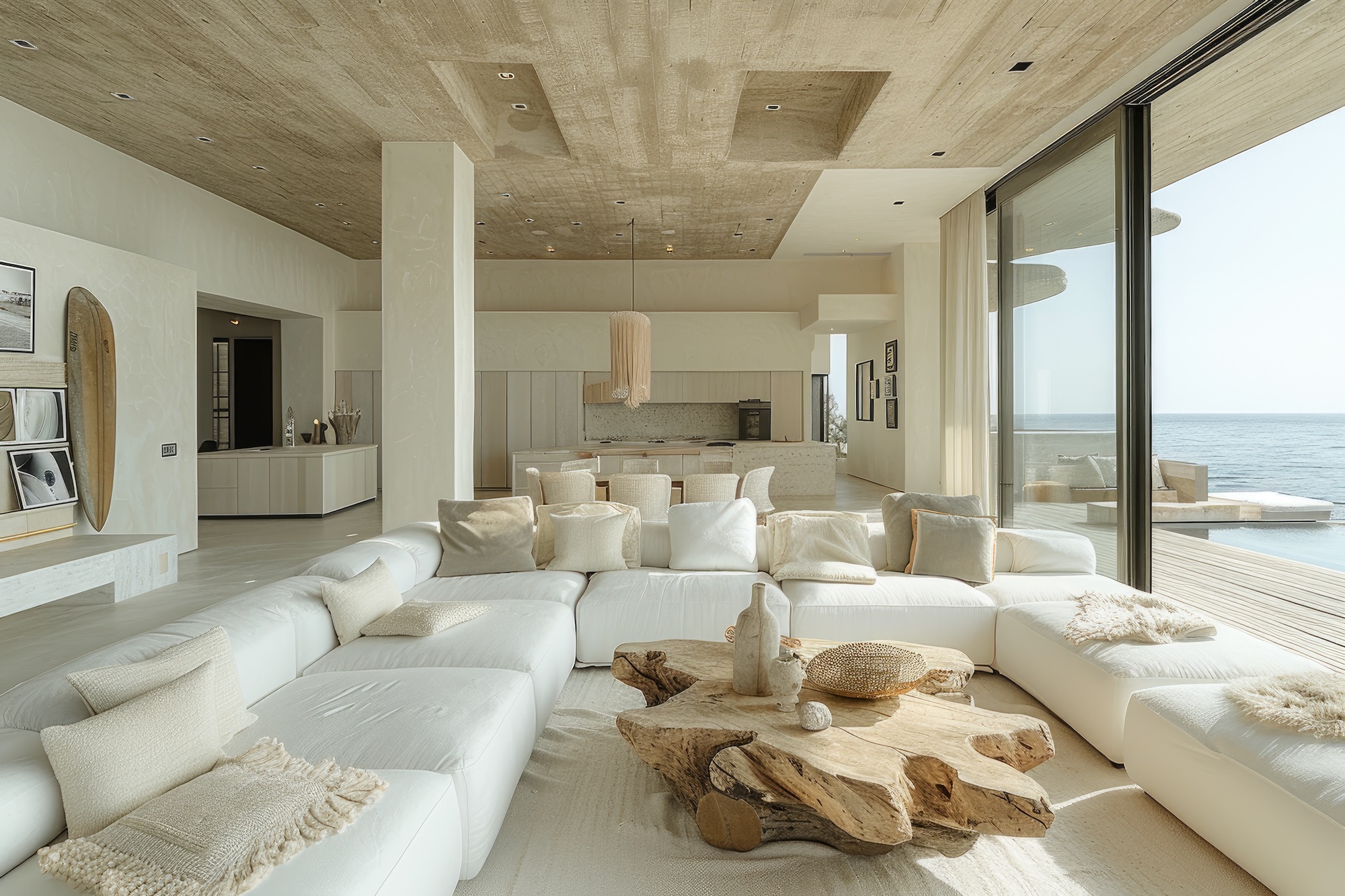
An open-plan living space is particularly well suited to a coastal home. Light can travel deeper into the interior, views remain uninterrupted, and daily life flows more naturally between indoors and out.
But openness alone does not create atmosphere. The most successful interiors combine a sense of space with warmth, intimacy, and places that naturally invite people to come together.
Natural materials, thoughtfully placed furniture, and a strong connection to the surrounding landscape can transform a large, open interior into a space that feels far more relaxed and inviting.
Create Rooms Without Walls
A spacious, open interior still needs moments of intimacy.
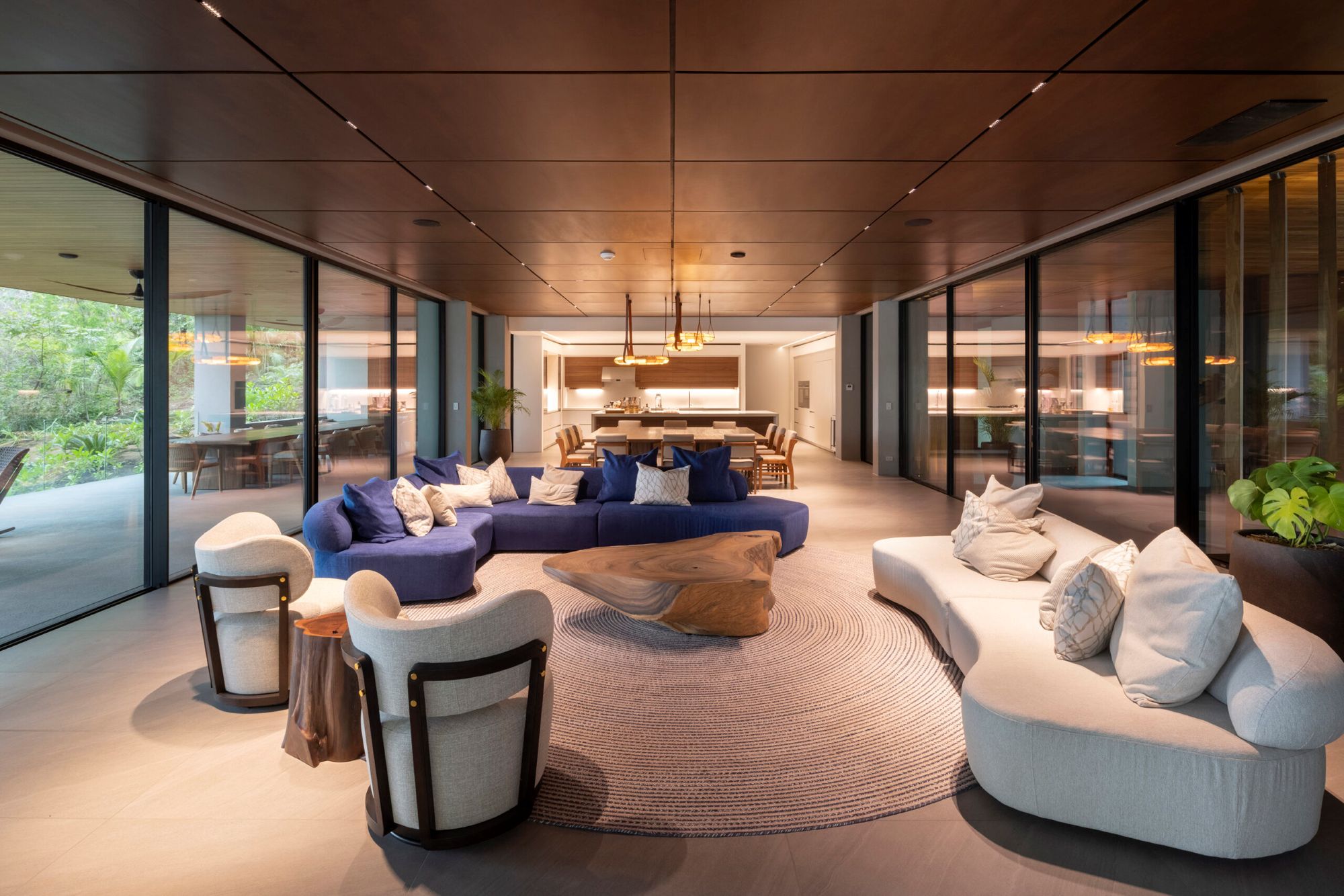
Rather than relying on walls, furniture can define these smaller spaces. Here, curved sofas and armchairs are arranged around a sculptural wooden table, while a circular rug visually anchors the composition.
The effect is subtle: the architecture remains completely open, yet the seating area feels like a space of its own.
This works particularly well in coastal homes, where preserving long sightlines toward terraces, gardens, and the water can be an essential part of the experience.
DESIGN NOTE
Use furniture to create boundaries without closing off the room. A rug, a change in furniture orientation, or a sculptural centerpiece can establish a distinct living area while keeping the wider space visually connected.
Open-Plan Coastal Living at Villa Avellana
Let Natural Materials Bring Warmth
Wood plays an important role in softening contemporary architecture.
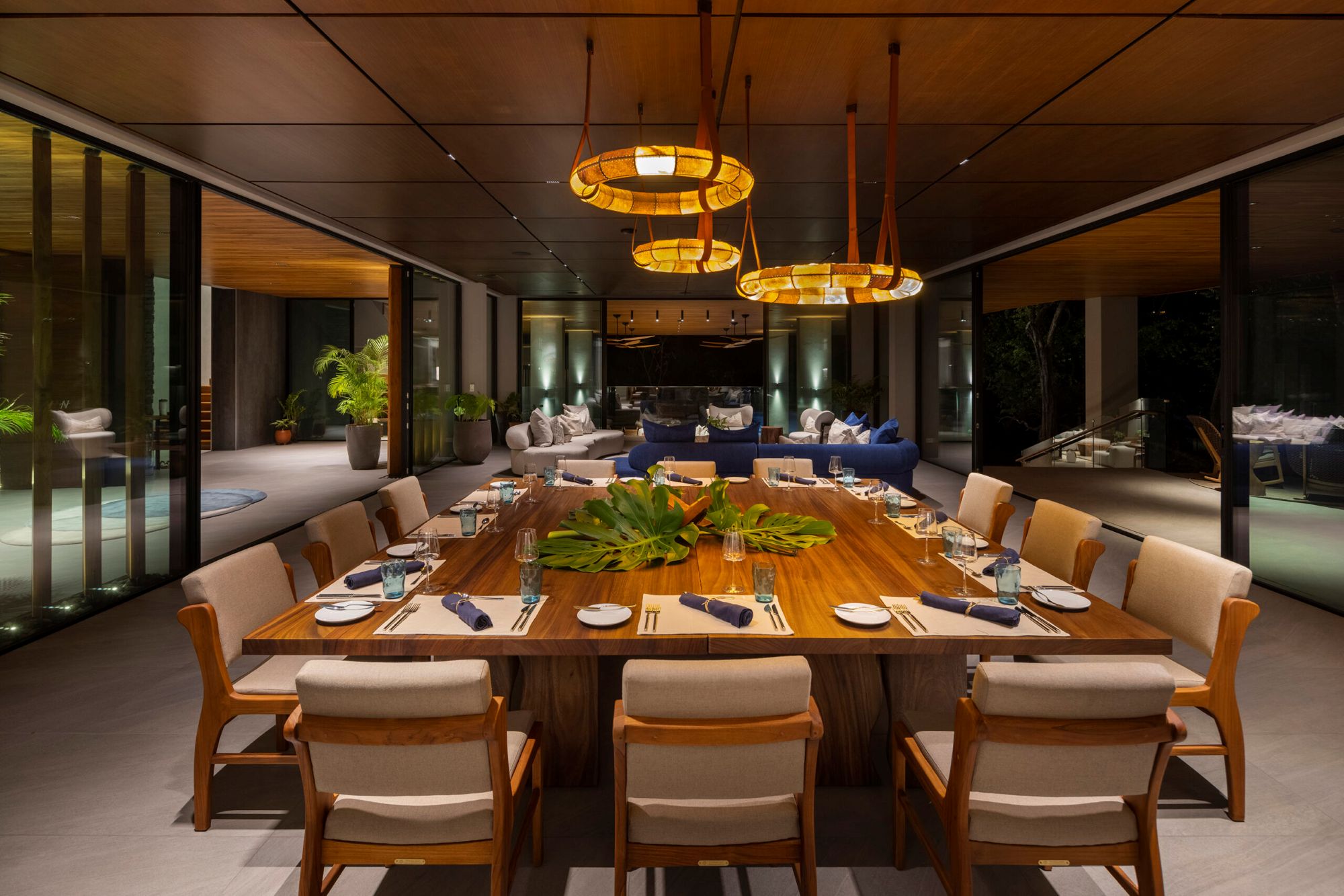
Against glass, stone and clean architectural lines, its natural grain introduces warmth and variation. Used across furniture, ceilings and smaller details, it can also create continuity between different areas of an open-plan home.
The large dining table becomes more than a functional piece. Its scale and materiality give the room a natural center—a place around which people gather.
Why Water Changes Our Perspective
There is a reason so many of the world’s most desirable destinations are found beside the water.
The sea naturally slows our attention. Unlike a city street, it asks nothing of us. There are no decisions to make, no advertisements to process, and no urgency demanding a response.
Instead, there is movement without pressure. Change without noise.
Many people describe their clearest thinking happening while walking along a coastline, sitting on a terrace overlooking the water, or watching the horizon from the deck of a yacht. The environment creates a subtle sense of distance from everyday concerns.
Problems often appear smaller. Ideas become clearer.
The sea does not provide answers, but it often creates the conditions that allow them to emerge.
A Different Relationship With Time
One of the most remarkable things about coastal living is the way it changes our relationship with time.
Days are no longer defined by appointments and obligations alone. They become shaped by natural rhythms.
Morning coffee overlooking the water.
An afternoon swim that lasts longer than expected.
Lunch with family and friends that turns into an entire afternoon.
An evening spent outside as daylight slowly fades.
None of these moments are extraordinary on their own. Yet together they create something increasingly rare: the feeling that there is enough time.
For many people, that feeling becomes one of the most memorable parts of any coastal escape.
The Places We Return To
The appeal of the coast is not really about the coast itself.
It is about what happens when we spend time there.
We become more present. We pay greater attention to the people around us. We rediscover activities that require no agenda and no outcome.
In many ways, the coast strips life back to its essentials.
Good food.
Meaningful conversations.
Beautiful surroundings.
Time spent with people we care about.
These are simple things, yet they are often the very things that become most valuable.
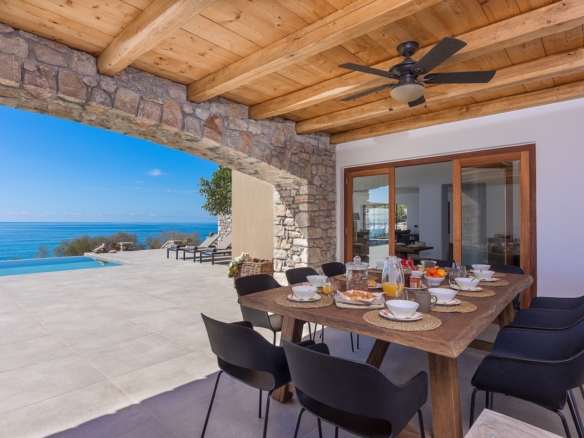
The places we remember most are often defined by the conversations, laughter, and shared moments that unfold around the table.
The Coast as a Measure of What Matters
On a yacht, the environment is never static. Light shifts across the water, views change throughout the day, and even familiar places feel different depending on how you approach them.
Afternoons often move easily between sun and shade, swimming and resting, with the option to explore or simply remain where you are. The experience evolves naturally, without needing to be planned.
A More Personal Way to Experience the Coast
The coast means something different to everyone.
For some, it is the privacy of a beautiful villa where family and friends can gather without distraction. For others, it is the freedom of exploring a coastline by yacht, discovering quiet bays and destinations that are difficult to reach any other way.
What these experiences share is a sense of space and flexibility. They allow travelers to shape their days around what feels meaningful rather than what is scheduled.
In a world that often feels increasingly standardized, that freedom can feel remarkably refreshing.
Considering a Different Way to Travel the Coast?
The most memorable coastal experiences are rarely defined by how much we see.
They are often defined by how deeply we experience a place.
A longer stay in a thoughtfully chosen villa. A journey along the water aboard a private yacht. Time spent exploring a destination at a slower pace.
These experiences create room for connection, perspective, and the kind of moments that stay with us long after returning home.
For those considering their next coastal escape, a more personal approach to travel may be the most rewarding place to begin.
Please enter your username or email address. You will receive a link to create a new password via email.
Manage Consent
We use cookies to ensure the website works properly, understand how visitors use CVAY, and support selected features such as maps, videos and social media. You can accept all cookies, decline optional cookies, or manage your preferences.
Functional
Always active
The technical storage or access is strictly necessary for the legitimate purpose of enabling the use of a specific service explicitly requested by the subscriber or user, or for the sole purpose of carrying out the transmission of a communication over an electronic communications network.
Preferences
The technical storage or access is necessary for the legitimate purpose of storing preferences that are not requested by the subscriber or user.
Statistics
The technical storage or access that is used exclusively for statistical purposes.The technical storage or access that is used exclusively for anonymous statistical purposes. Without a subpoena, voluntary compliance on the part of your Internet Service Provider, or additional records from a third party, information stored or retrieved for this purpose alone cannot usually be used to identify you.
Marketing
The technical storage or access is required to create user profiles to send advertising, or to track the user on a website or across several websites for similar marketing purposes.