Exclusivity Has Become Remarkably Common

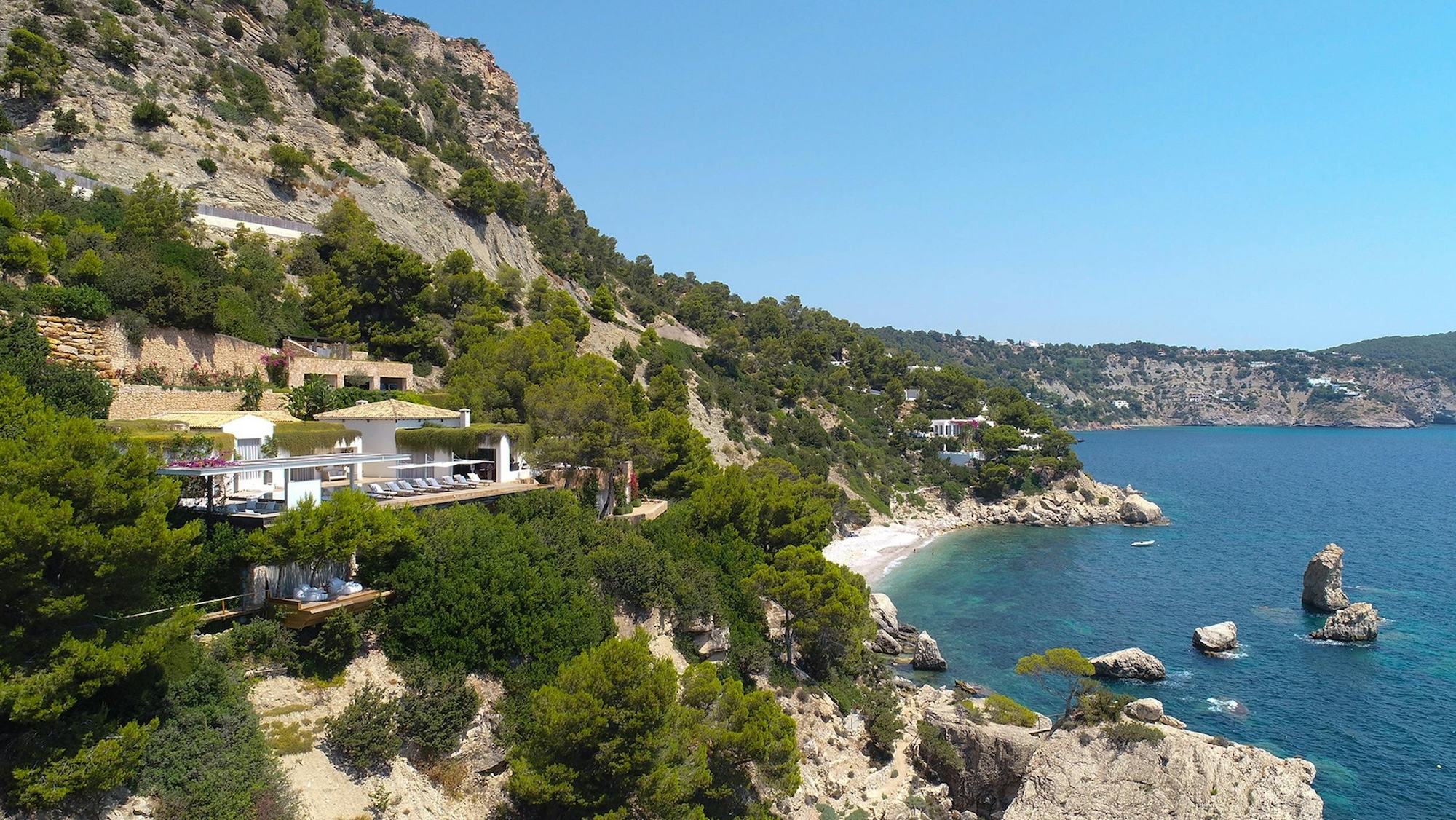
Oceanfront residential towers overlooking Miami Beach, Florida, with a wide sandy beach and Atlantic coastline.
CVAY COASTAL INTELLIGENCE · INVESTIGATION 001

Miami is building it. Tulum has been selling it. Mallorca and Ibiza are trying to preserve it. But in coastal real estate, what actually makes a property rare?

Luxury property has developed a curious relationship with scarcity. Apparently, almost everything is exclusive now. The residences are exclusive, the amenities are exclusive, the beach clubs are exclusive, and even the opportunity to purchase something exclusive is occasionally presented as an exclusive privilege. One might reasonably wonder how an industry capable of producing so much exclusivity manages to keep finding enough of it to sell.

It is an amusing contradiction, but behind the marketing language lies a serious economic question. Across desirable coastlines, developers continue to introduce expensive residences with increasingly elaborate amenities, while certain exceptional properties remain extraordinarily difficult to acquire. The apparent paradox becomes easier to understand once we stop treating luxury as a single property category. An apartment in a newly completed tower, a beachfront villa and a historic estate may all carry impressive price tags, but their relationship with scarcity can be entirely different.

To explore that distinction, CVAY Coastal Intelligence examined three coastal markets with markedly different characteristics: Miami and South Florida, where luxury development has become an industry in its own right; Tulum, where investment enthusiasm appears to have outrun demand; and Mallorca and Ibiza, where geography and planning authorities tend to be rather less impressed by an attractive architectural rendering. Together, they reveal why the amount of luxury being created tells us surprisingly little about the availability of genuinely irreplaceable property.

Miami: Exclusivity, Now Available in Considerable Quantities

Miami has become remarkably good at producing exclusivity at scale. It is an impressive achievement, considering that exclusivity traditionally involves having rather less of something. Across South Florida, new condominium towers compete through architectural ambition, elaborate amenities, branded services and the increasingly creative vocabulary of luxury marketing. There is no shortage of imagination, and there is certainly no shortage of construction.

According to commercial development tracker RealVista, South Florida had 280 projects classified as pre-construction or under construction in October 2026. Of those, 213 disclosed unit counts representing 36,992 homes. These figures do not describe 36,992 unsold apartments, nor do they establish how many residences will be delivered in any particular year. They do, however, illustrate the extraordinary scale of property being introduced to a market in which exclusivity remains one of the principal selling points.

Whether that constitutes oversupply is a more complicated question. In July 2026, Miami-Dade’s existing condominium market carried 12 months of supply, according to MIAMI REALTORS, compared with 4.8 months for existing single-family homes. The distinction suggests that buyers of existing apartments generally had substantially more choice than buyers of detached houses. Yet the same regional market recorded 3,171 MLS-covered condominium sales above $1 million in 2025, compared with 1,529 in 2019—an increase of approximately 107%. Evidently, a substantial supply of expensive property does not necessarily imply an absence of buyers willing to purchase it.

At the highest price levels, the picture becomes more interesting still. South Florida recorded its highest number of $20 million-plus condominium transactions in 2025, while Miami-Dade had already surpassed its previous annual record for residential sales above $30 million by September 2026. These are distinct records covering different geographies and property categories, but together they demonstrate that exceptionally expensive transactions continue to take place even as the wider condominium market offers buyers considerable choice.

The temptation is to conclude that ordinary luxury is struggling while exceptional luxury remains immune. That would be convenient, particularly for anyone currently marketing an exceptional luxury property, but the evidence does not quite justify it. Trophy transactions demonstrate demand at the top; they do not prove that every trophy property is fairly priced or protected from a future correction. Nor do existing-home sales measure the full new-development market, where many transactions take place outside conventional MLS reporting.

What Miami does reveal is the importance of substitutability. A beautifully finished apartment with a rooftop pool, concierge and impressive lobby may be desirable, but it becomes less distinctive when several neighbouring buildings offer broadly similar advantages. Another residence may occupy an unusually private waterfront site, possess a genuinely exceptional floor plan or offer a view that cannot realistically be duplicated. Both can be described as luxury. Only one may have a particularly limited number of credible substitutes.

The difference matters because buyers do not purchase abstract market categories. They purchase individual properties, each competing with a particular set of alternatives. Miami’s expanding skyline makes that distinction increasingly important. A premium price may be justified by a rare asset, but it may also reflect the considerable expense of producing something that looks rare.

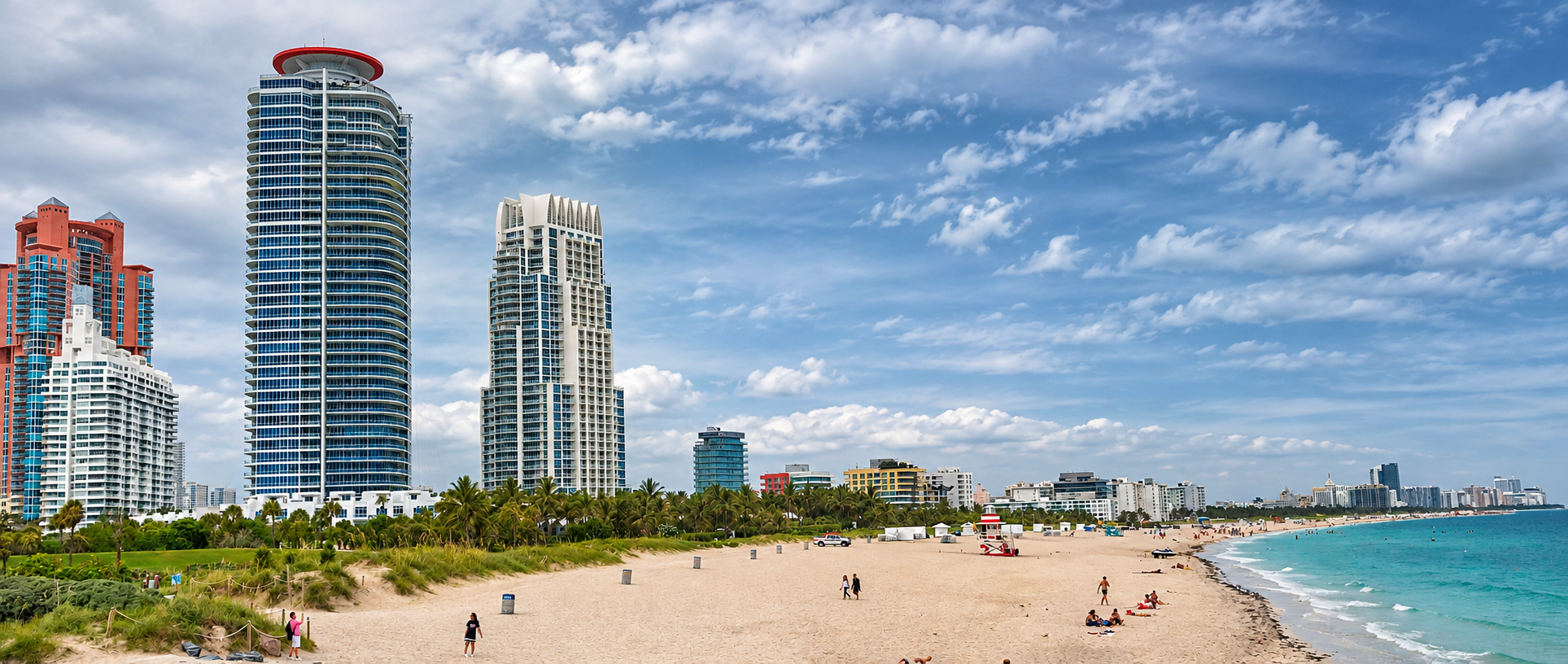
Aerial view of beachfront villas and low-rise properties surrounded by tropical vegetation along the Caribbean coastline near Tulum, Mexico.
Coastal development along the Tulum shoreline, where tropical landscapes and beachfront real estate meet.

Tulum: When the Investment Brochure Meets the Market

Tulum’s property story began with a compelling proposition. The destination offered Caribbean beaches, distinctive tropical architecture, an international lifestyle and the appealing possibility of acquiring property in a place that appeared to be growing more desirable by the year. For investors, the attraction was not merely the prospect of enjoying the destination, but of having other people pay to enjoy it when they were elsewhere.

Developers responded enthusiastically. Residential projects multiplied, many aimed at buyers seeking holiday accommodation and short-term rental income rather than permanent homes. A certain architectural vocabulary became familiar: natural materials, carefully framed greenery, private plunge pools and spaces designed to suggest that owning an investment property might be remarkably similar to attending a particularly tasteful wellness retreat.

There is nothing inherently wrong with that proposition. The difficulty arises when too many developments depend on similar assumptions about future visitors, rental demand and resale opportunities. A property can be appealing as a place to stay while becoming increasingly difficult to distinguish as an investment.

The available evidence suggests that Tulum has encountered precisely this problem. An InfoHabitat analysis using commercial market data from Softec, reported by Mexican business publications El Economista and Expansión, estimated that annual residential sales fell from 3,487 units in 2023 to 1,711 in 2025, a decline of approximately 51%. The same analysis reported that average monthly sales per development fell from 1.4 units in 2022 to 0.9 in 2025. These are meaningful warning signals, although the underlying commercial dataset is not publicly available for independent reconstruction. The two publications also rely on the same research chain, so their reporting should not be mistaken for two separate measurements.

Short-term rental data add another dimension. AirDNA reported approximately 46% trailing-twelve-month occupancy for Tulum vacation rentals in November 2026. That figure should not be confused with hotel occupancy, nor does it establish the profitability of an individual apartment. It does, however, suggest that buyers relying on consistently high occupancy assumptions have reason to examine those projections carefully. The Caribbean may be beautiful, but it does not guarantee that a guest will arrive every night.

Tulum also illustrates the danger of relying too heavily on headline prices. An advertised value can remain ambitious even when sales slow, competing inventory increases or rental economics weaken. Without comprehensive, publicly accessible records of comparable completed transactions, it becomes difficult to determine how much buyers are actually paying, whether meaningful discounts are occurring and how different property types are performing.

This uncertainty is particularly important at the highest end of the market. Tulum may contain genuinely unusual beachfront properties and low-density locations with limited substitutes, but the available evidence does not establish that such assets are insulated from the wider correction. It would be premature to claim otherwise simply because the properties look exceptional.

The lesson is not that Tulum has lost its appeal or that its market cannot recover. Destinations evolve, development cycles change and new infrastructure can alter demand. The more immediate lesson is that attractive architecture, an appealing lifestyle and a persuasive investment narrative are not substitutes for demonstrated absorption. When numerous properties offer a similar experience to the same pool of buyers and visitors, the word exclusive begins to require a little more explanation.

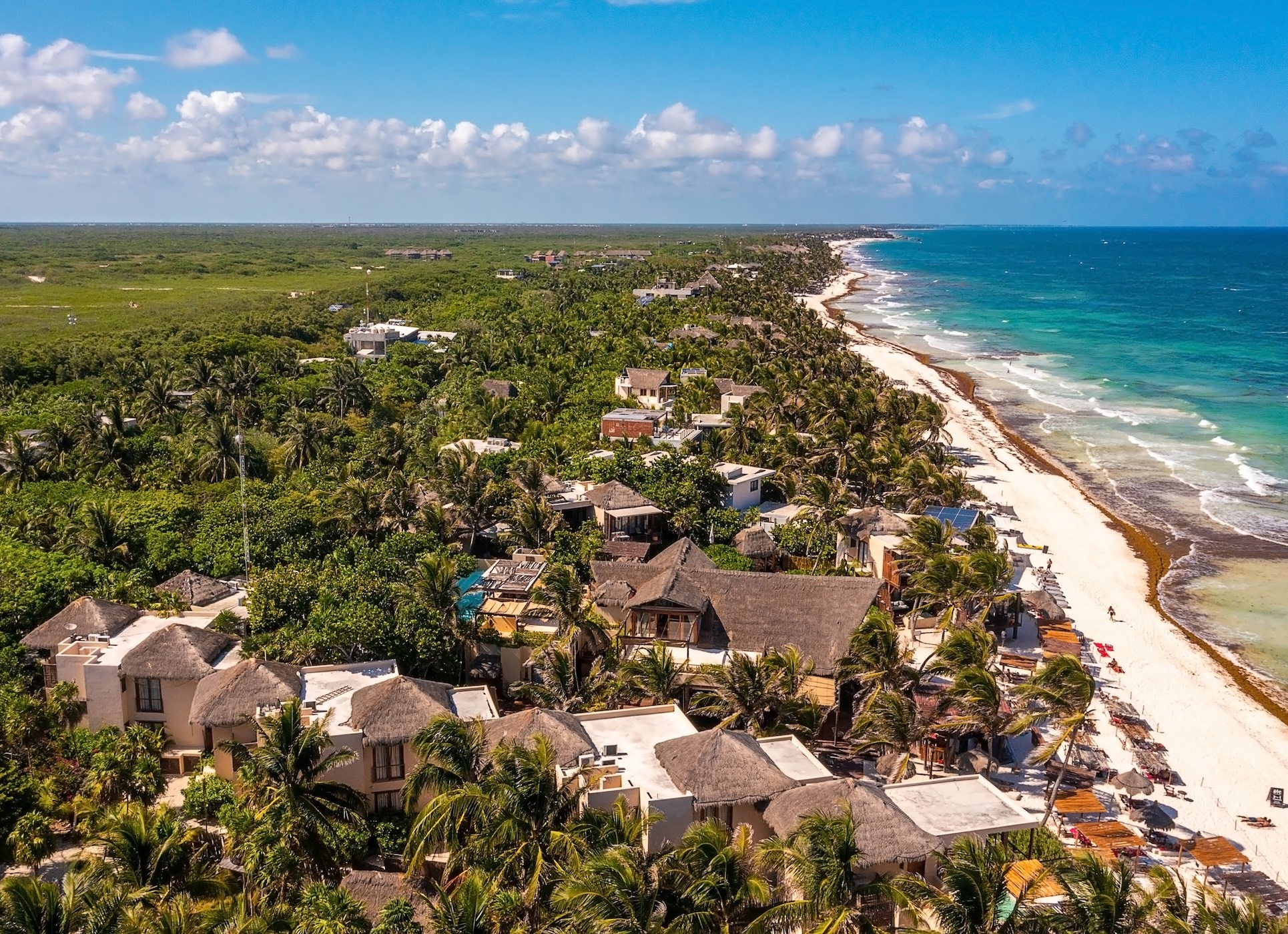
Luxury villa nestled into the rocky Mediterranean coastline above a secluded cove in Ibiza, surrounded by pine-covered cliffs and turquoise water.
Ocean Paradise, Ibiza. Architecture can be recreated. An exceptional stretch of coastline is another matter.

Mallorca and Ibiza: Where the Landscape Has the Final Say

Mallorca and Ibiza approach the question of scarcity from a different direction. Their coastlines, established communities and distinctive landscapes have attracted international buyers for decades, but the islands also operate within geographic and planning constraints that make certain kinds of property difficult to reproduce. An exceptional coastal estate cannot necessarily be replicated simply because somebody has identified another beautiful hillside and persuaded an architect to draw a very attractive house upon it.

Official data from the Balearic Housing Observatory help explain the broader pressure on the islands’ residential market. Between 2000 and 2025, the Balearic population increased by approximately 46.3%, while the housing stock grew by 31.6%. On Ibiza, population growth approached 83%, compared with housing-stock growth of approximately 40%. These are general housing statistics rather than measurements of ultra-prime demand, but they demonstrate that residential supply has not expanded at the same pace as the population.

Planning restrictions add another layer. On common rural land in Mallorca, the statutory baseline for a new single-family dwelling generally requires a parcel of at least 14,000 square metres, with only one dwelling permitted per parcel. Other land classifications, environmental protections and municipal rules can impose considerably stricter conditions or prevent development altogether. The minimum parcel size is therefore not an invitation to build, and anyone interpreting it as such may find that the planning authorities have a different understanding of the legislation.

These restrictions help explain why particular combinations of location, land, privacy and views can be difficult to reproduce. A mature estate with substantial grounds, a protected outlook and convenient access to an established coastal community may possess advantages that cannot readily be recreated in a new development. In such cases, scarcity is not simply a claim made in a brochure; it is connected to geography, legal constraints and the limited availability of comparable sites.

But the Balearics also provide a useful reminder that genuine scarcity and ambitious pricing can coexist quite comfortably. In September 2026, the regional government reported that average property-portal asking prices for 2025 were more than 38% above the average transaction-price measure derived from regional tax records. The comparison concerns different market datasets, not the negotiated discount between asking and selling prices for identical homes. It would therefore be incorrect to conclude that buyers routinely secure reductions of 38%.

The finding is nevertheless revealing. An asking price expresses what a seller hopes to receive; a completed transaction records what a buyer has actually agreed to pay. The two are related, but they are not interchangeable. In an international luxury market, where properties can remain listed for long periods and comparable transactions may be scarce, the distinction becomes particularly important.

A villa can occupy an irreplaceable position and still be offered at an unrealistic price. Indeed, the more unusual a property becomes, the more difficult it may be to establish its value through conventional comparisons. Scarcity may explain why a buyer is willing to pay a premium, but it does not establish how large that premium ought to be. The Mediterranean has many admirable qualities; the ability to suspend the principles of valuation is not generally among them.

The Difference Between Expensive and Rare

What connects these three markets is not a common property cycle. Miami’s development pipeline, Tulum’s investor-oriented supply and the Balearics’ planning constraints reflect different economic conditions. Treating them as evidence of one global luxury-property glut would be an oversimplification, even if it made for a dramatic headline.

The more useful connection lies in how properties compete.

Luxury is often described through features: materials, architecture, services, amenities and price. These attributes can make a residence desirable, sometimes exceptionally so. But many can also be reproduced. A new building can offer another rooftop pool, another concierge service or another collection of beautifully appointed apartments. The next development may even improve upon the previous one, which is excellent news for buyers and somewhat less comforting for anyone who paid a substantial premium for yesterday’s supposedly unrivalled offering.

Scarcity operates differently. It concerns the availability of credible substitutes. A protected waterfront position, an unusually large parcel, exceptional privacy or a historically distinctive building may be difficult to replicate regardless of how much money another developer is prepared to spend. Yet even these advantages are not permanent guarantees. Environmental exposure, infrastructure problems, ownership costs and changes in the surrounding neighbourhood can all alter a property’s desirability.

For that reason, scarcity should be investigated rather than assumed. How many comparable properties actually exist? What new supply could compete with them? What have buyers paid for similar assets, rather than what sellers are requesting? Are purchasers motivated by long-term use and ownership, or primarily by projected investment returns? And which characteristics will remain distinctive after current design fashions and marketing language have moved on?

These questions do not produce a convenient universal formula. They do, however, encourage a more useful assessment than simply accepting a luxury label at face value.

Beyond the Obvious

The international property industry has become exceptionally sophisticated at presenting exclusivity. Architecture is more ambitious, amenities more elaborate and marketing more polished than ever. None of this is inherently objectionable. Good design and thoughtful services genuinely improve the experience of owning and using a property, and buyers are entitled to value them.

The difficulty begins when exclusivity is treated as a self-evident consequence of expense. A high asking price may reflect an exceptional site, extraordinary craftsmanship or genuinely limited supply. It may also reflect development costs, optimistic projections or a seller with considerable confidence in the persuasive powers of the Mediterranean sunset.

Miami shows that substantial new luxury supply can coexist with remarkable activity at the highest price levels. Tulum demonstrates how vulnerable investor-oriented property can become when similar developments depend on the same demand assumptions. Mallorca and Ibiza illustrate how genuine supply constraints can protect the distinctiveness of certain assets without making every asking price reasonable.

The three markets do not tell us that expensive coastal property is becoming universally abundant, or that genuinely scarce homes will always outperform. They tell us something more useful: price, quality and scarcity are different characteristics, and a serious buyer should understand each of them separately

Perhaps the most important question in coastal property is therefore no longer whether a home qualifies as luxury. That distinction has become rather easy to acquire.

The more interesting question is what, precisely, makes it difficult to replace.

CVAY Coastal Intelligence is an independent, research-led editorial initiative examining international coastal property, ownership and lifestyle markets. This investigation draws on research and market information available through 11 November 2026. Official transaction records, commercial market estimates and CVAY’s editorial interpretations are distinguished throughout. The article is not investment advice.

Not off the beaten path. Just beyond the obvious.

This investigation draws on residential property market statistics, development pipeline reports, official government housing data, industry research and short-term rental performance indicators available through November 2026.

The analysis distinguishes between advertised prices and recorded transactions, planned construction and completed inventory, and broad market trends and individual exceptional properties. These distinctions matter: a growing development pipeline does not necessarily indicate unsold inventory, just as record-breaking transactions do not establish the strength of an entire luxury market.

Where independently verifiable transaction data is unavailable, conclusions are qualified accordingly. The findings are intended to inform thoughtful coastal property decisions rather than provide individual investment advice.

Author