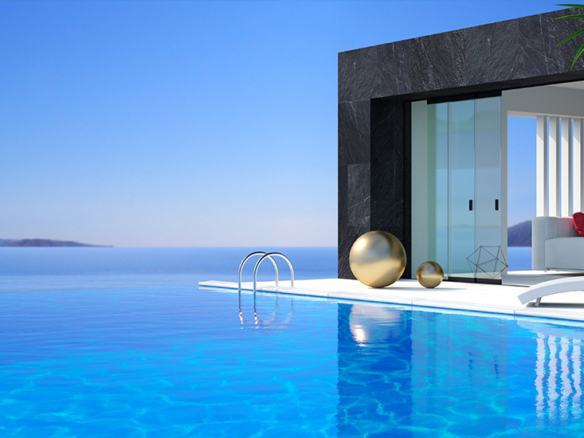
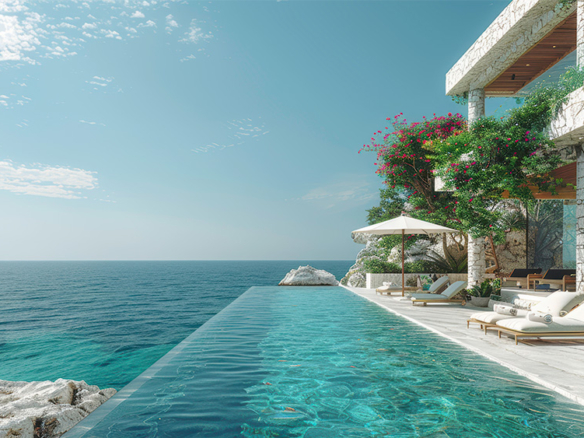
There are coastal homes you can find with a search.
And then there are the ones you never see.
They sit quietly above the water, shaped by years of salt air and softened by sunlight. Their shutters are opened each morning by familiar hands. Their terraces know the rhythm of the same footsteps, season after season. These homes are rarely photographed. They are not promoted. They do not wait to be discovered.
They are already claimed.
If you’ve ever driven along a coastal road and wondered who lives there, chances are you were looking at one of them.
The Homes That Don’t Circulate
In the world’s most coveted coastal enclaves — parts of Capri, northern Sardinia, select corners of the Balearics, quieter Caribbean islands, pockets of the Pacific — the homes that truly define a place rarely change hands.
They belong to families, not portfolios.
These are houses where generations have grown up swimming from the same rocks. Where summers unfold without schedules. Where the view is no longer something admired, but something lived inside.
To sell such a home is not a transaction.
It is a separation.
And so, most owners never consider it.
What Makes Them Different
At first glance, these homes may not appear extraordinary.
They are often not the largest.
Rarely the newest.
Never the loudest.
What they possess is something far more difficult to replicate: the right orientation to the sun, shelter from prevailing winds, and a natural alignment with the land and the sea.
Morning light enters softly, never harshly.
Terraces remain usable throughout the day.
Paths to the water feel inevitable, not designed.
These qualities cannot be recreated once they are lost.
And those who own them understand this instinctively.
The Quiet Weight of Belonging
Over time, coastal homes begin to absorb lives.
They hold the memory of long lunches that stretch into evening. Of children learning to swim under patient supervision. Of days when the sea is too calm to leave, and no one feels the need to.
Walls remember voices.
Floors remember movement.
The land itself remembers presence.
This is why, even in strong markets, even when offers are generous, many owners quietly decline.
Because the value of these homes is not purely financial.
It is emotional. Generational. Deeply personal.
To let go of them is to let go of a particular way of living.
When They Do Become Available
And yet — sometimes — they do.
Not announced.
Not advertised.
Not negotiated loudly.
A conversation takes place.
Timing aligns.
A discreet introduction is made.
Those who step into these moments are rarely searching aggressively. They are listening. They are patient. They understand that access is not claimed — it is granted.
And when the door opens, it does so carefully.
A Different Relationship With the Coast
This is why the most beautiful coastal homes rarely appear online.
They are not meant to circulate endlessly.
They are meant to belong.
In a world that moves faster each year, these homes represent something increasingly rare: continuity. A place that holds still while everything else changes.
Perhaps this is why they are so deeply desired — not because they are unavailable, but because they reflect a life that feels complete.
A Final Thought
The homes you see listed will always exist.
But the homes that shape our idea of coastal living often remain unseen.
Not hidden — simply held.
And that, in itself, is what makes them extraordinary.
Also read this article:
The Coastal Real Estate Trends 2026: The New Wealth Migration